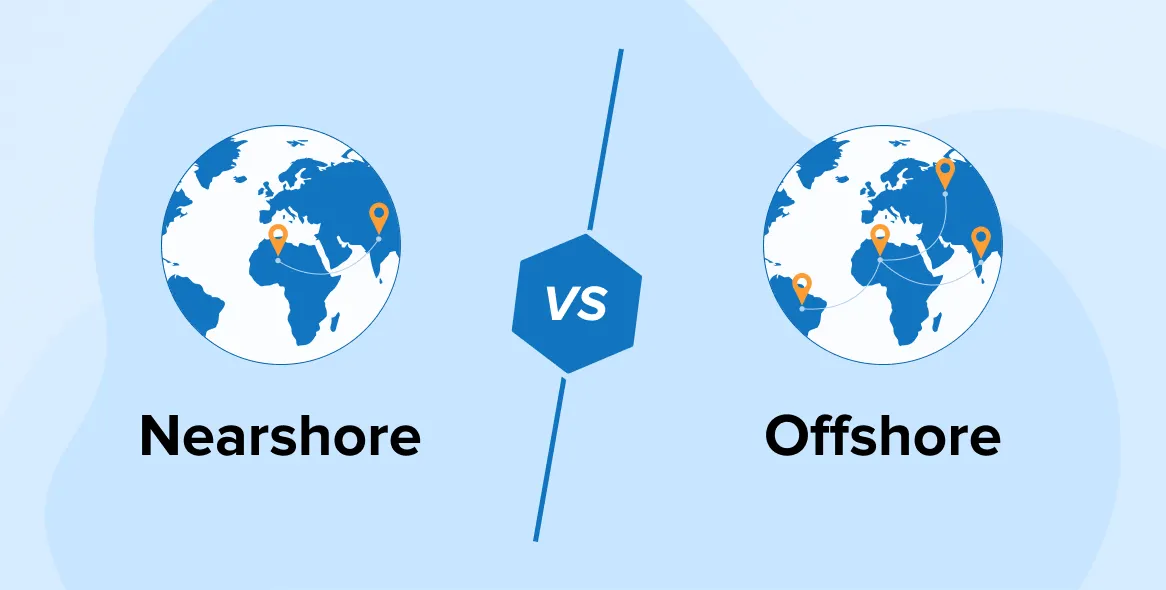
When you are trying to grow your business without blowing up your payroll, staffing decisions matter more than ever. Domestic hiring is expensive. Offshore hiring sounds cheap until you factor in the hidden costs. And nearshore staffing sits in the middle — offering real cost savings without the communication headaches that come with hiring halfway around the world.
At GSD Staffing, we help U.S. small businesses build nearshore teams from Latin America that save 30% to 60% compared to equivalent domestic hires. In this guide we break down the true cost of each staffing model so you can make the right call for your business in 2026.
The True Cost of Domestic Staffing
Hiring locally is the default for most U.S. businesses — and it is also the most expensive option by a wide margin.
The fully loaded cost of a domestic support or administrative role goes well beyond the base salary. Once you add payroll taxes, health insurance, retirement contributions, paid time off, equipment, and office space, a $60,000 salary becomes a $78,000 to $84,000 annual expense. In high-cost cities like New York, San Francisco, or Boston, that number climbs even higher.
According to the Kaiser Family Foundation’s 2023 Employer Health Benefits Survey, employers pay an average of over $6,000 per year per employee for individual health coverage alone. Add the Society for Human Resource Management’s estimate that replacing an employee costs 50% to 200% of their annual salary, and the true cost of domestic staffing becomes clear.
For roles that do not require physical presence — administrative support, marketing coordination, sales operations, customer follow-ups — paying domestic rates is increasingly difficult to justify.
The True Cost of Offshore Staffing
Offshore staffing in countries like India, the Philippines, or Eastern Europe is often positioned as the cheapest option. And on paper, the numbers look compelling. A role that costs $60,000 in the U.S. might cost $18,000 to $22,000 offshore.
But the sticker price rarely tells the full story.
Time zone gaps — offshore teams in Asia are 10 to 13 hours ahead of U.S. time zones. Real-time collaboration becomes nearly impossible, urgent requests sit unanswered overnight, and project timelines stretch.
Communication friction — language barriers, cultural differences, and limited working-hour overlap all create inefficiencies that eat into the cost savings you thought you were getting.
Hidden oversight costs — managing an offshore team often requires additional project management, quality control, and communication infrastructure that adds time and money.
Compliance complexity — data security, intellectual property protection, and labor law compliance vary widely across offshore markets and can require costly legal oversight.
When you factor in all of these hidden costs, the true price of offshore staffing is often significantly higher than the base salary suggests.
The True Cost of Nearshore Staffing
Nearshore staffing — hiring professionals from nearby countries in Latin America — offers a compelling middle ground. The cost savings are real, and the friction points that plague offshore arrangements largely disappear.
Here is what a typical role costs across all three models:
| Role | Domestic | Offshore | Nearshore via GSD |
|---|---|---|---|
| Virtual Assistant | $45,000–$55,000/yr | $12,000–$18,000/yr | $27,000/yr |
| Marketing Associate | $55,000–$70,000/yr | $15,000–$22,000/yr | $30,000–$32,400/yr |
| Sales Operations | $55,000–$65,000/yr | $14,000–$20,000/yr | $27,000/yr |
| IT Help Desk | $50,000–$65,000/yr | $14,000–$20,000/yr | $27,000/yr |
GSD Staffing clients consistently save between 30% and 60% compared to equivalent domestic hires — without the time zone misalignment and communication challenges that come with offshore arrangements.
Why Nearshore Staffing Outperforms Offshore for U.S. Businesses
The cost comparison alone makes nearshore staffing attractive. But the operational advantages are what make it sustainable long term.
Same time zone, real collaboration — GSD Staffing sources talent from Guatemala, El Salvador, Honduras, Nicaragua, Belize, and Colombia. These professionals work standard U.S. business hours, join your calls, respond in real time, and feel like a genuine part of your team from day one.
Cultural alignment — Latin American professionals have strong familiarity with U.S. business norms, communication styles, and professional expectations. Onboarding is faster and day-to-day collaboration is smoother than with offshore alternatives.
English fluency — GSD Staffing virtual assistants, marketing associates, and support professionals are bilingual, with strong written and spoken English skills. Client-facing interactions reflect your brand appropriately.
Lower turnover — nearshore professionals working in aligned time zones with clear communication structures tend to stay longer, reducing the replacement and retraining costs that quietly drain offshore arrangements.
No upfront fees — GSD Staffing handles the full recruiting process at no cost to you. Billing starts on the day your hire begins, not before.
Free replacement guarantee — if a placement does not work out, we replace them quickly and at no additional cost.
Frequently Asked Questions About Nearshore vs Offshore Staffing Costs
What is the difference between nearshore and offshore staffing?
Nearshore staffing means hiring professionals from nearby countries — typically Latin America for U.S. businesses — who work in your time zone and share cultural alignment with your team. Offshore staffing means hiring from distant countries, often in Asia or Eastern Europe, where time zone gaps and cultural differences can create significant operational friction.
How much does nearshore staffing cost compared to domestic hiring?
GSD Staffing clients typically save between 30% and 60% compared to equivalent U.S.-based hires. Virtual assistants and support roles start at $2,250 per month, all-inclusive. Marketing associates start at $2,500 per month. There are no upfront recruiting fees and no payment until your hire starts.
Is nearshore staffing cheaper than offshore staffing?
Nearshore staffing is generally more expensive than offshore on a base salary comparison, but the total cost of ownership is often comparable or lower. When you factor in the productivity losses, communication overhead, and management costs associated with offshore arrangements, nearshore staffing frequently delivers better value for roles that require real-time collaboration.